Backflow prevention
Backflow prevention: testing, installation and repair for the assembly that protects the water behind it
The device that keeps what is on your side of the meter from siphoning back into the water everyone else drinks. We test it, install it, and fix what actually fails on one.
Chapter 01
What the assembly protects and why it exists
A backflow preventer is a mechanical assembly, usually a set of check valves and a relief valve, installed where a property's plumbing connects to the public water supply. Its only job is to stop water from flowing backward into that supply if pressure in the main line drops, which can happen during a water main break or heavy demand elsewhere on the system. Without one, whatever is on the property side of that connection, irrigation chemicals, a cross-connection in an older building, standing water in a tank, has a path back into water other people are drinking.
It is required on irrigation systems, most commercial buildings, and any property with a connection the water utility considers a risk, which is most of them. It is not optional equipment, and it is not something either of us gets to decide against once the property has that kind of connection.
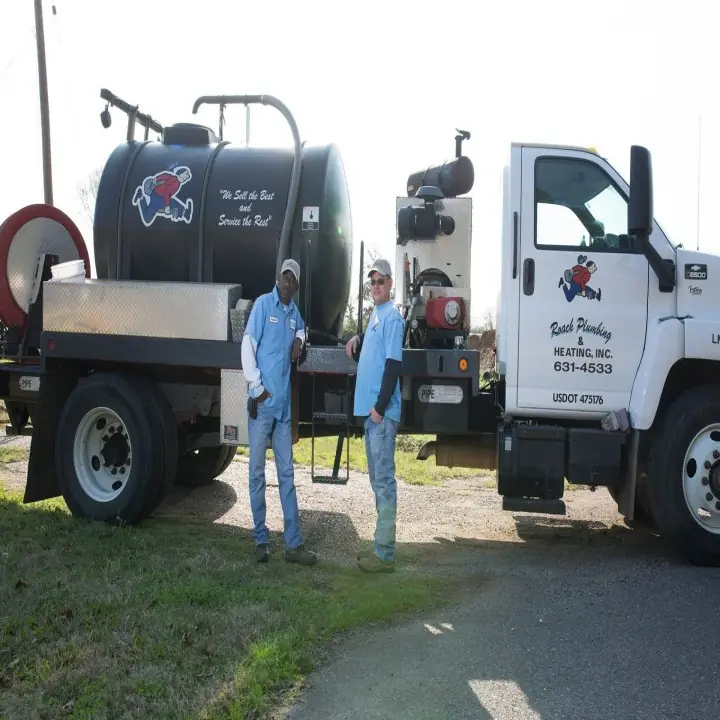
Roach Plumbing & Heating crew and service truck, dispatched to test, install and repair backflow prevention assemblies in Shreveport
Annual testing, and who actually has to do it
A backflow assembly has moving parts, and moving parts wear. Most local water utilities require an annual test to confirm the check valves are still holding and the relief valve still opens the way it is supposed to, and the test itself has to be performed by a certified backflow tester, not just a plumber with a wrench. The result gets reported to the utility, which is what keeps the property's water connection in good standing.
If you have never had yours tested, or you are not sure when the last test was, that is worth a call before it becomes the utility's problem to chase you down about. We handle the testing and the reporting, the same way we would any other appointment.
Chapter 03
Installation and repair: what actually fails on an assembly
New installation is straightforward when the property is being set up for irrigation or a new commercial connection, sized and placed to whatever the local code and the utility require. Repair calls are more common, and they tend to be the same handful of things: a check valve that has started to seep instead of seal, a relief valve that will not stop weeping water, or an assembly old enough that its internal parts have simply worn past what a rebuild kit fixes.
A failed test result tells us which of those it is before we ever open the assembly up, which is most of what makes a repair visit quick rather than a guessing exercise. Where a rebuild will hold, we rebuild it. Where the assembly itself has reached the end of what parts can fix, we replace it and get the new one tested and reported the same visit.
Roach Plumbing — Louisiana State Plumbing Board license #LMP1321. USDOT 475176. Call (318) 631-4533.
Irrigation is the most common reason we are out testing one
Most of the backflow assemblies we test and service are on irrigation systems, since an irrigation line is exactly the kind of cross-connection the utility is worried about: chemicals, fertilizer and standing water in a system that ties directly into the same supply as the kitchen sink. If we are already out doing irrigation work, we check the backflow assembly while we are there, and if we are out for the assembly on its own, it is worth mentioning if the irrigation system itself has never been looked at.
The same is true on the commercial side. A building with a fire line, an irrigation zone and a domestic water line often has more than one backflow assembly on the property, each protecting a different connection and each due for its own annual test on its own schedule. Keeping track of which one is due, and testing it before the utility notice arrives, is most of the job.