How to Tell Your Water Heater Is Near the End
Most water heaters give you warning before they fail outright. The trouble is most people never learn what to look for until the warning is a puddle on the garage floor.
August 24, 2026 · 3 min read
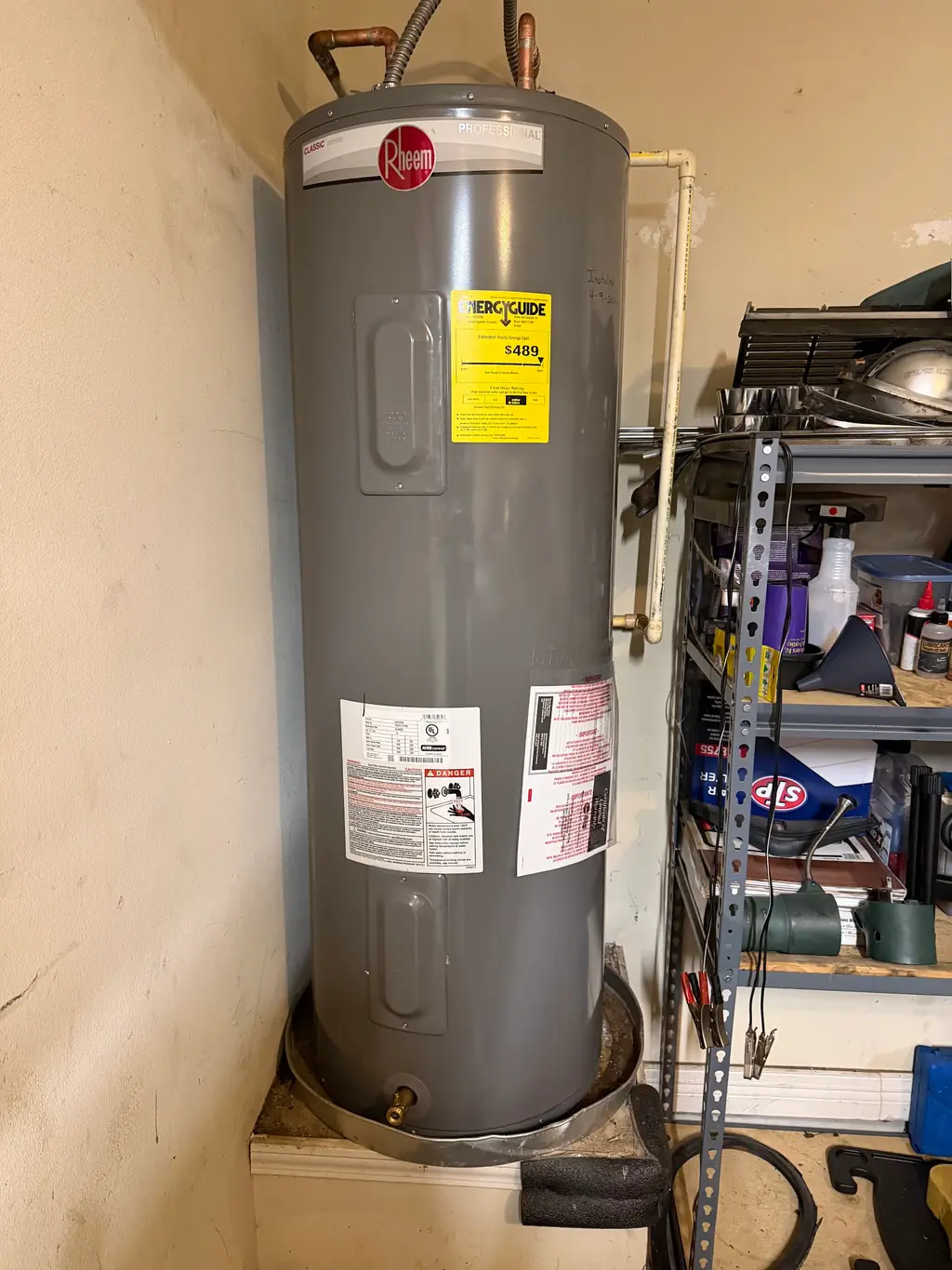
We've installed a lot of Rheem, Ruud, and State water heaters around Shreveport over the years, tank and tankless both, and the same conversation comes up over and over: a homeowner has no idea how old their unit actually is, or whether the noise it's making is normal. Here's what we'd want you to know before it fails on its own schedule instead of yours.
Reading the age plate
Every water heater has a serial number on the manufacturer's rating plate, usually near the top of the tank, and that serial number encodes the manufacture date even though it rarely says a plain date outright. The format varies by manufacturer, but a common one is the first letter representing the month (A for January, B for February, and so on) followed by two digits for the year. So a serial starting with something like F19 typically means June of 2019. If you can't work it out from the plate, take a photo of the full label and call us. We can usually tell you the age in under a minute.
Tank water heaters: what failing looks like
- Rust-colored water coming from hot taps, especially first thing in the morning, which usually means the tank itself is corroding from the inside.
- Popping, rumbling, or banging sounds during heating cycles. This is usually sediment that's built up and hardened on the bottom of the tank, and it makes the unit work harder and fail sooner.
- Water pooling around the base of the tank, even a small amount. A tank doesn't usually leak and then stop; it leaks a little, then more.
- A noticeable drop in how much hot water you get before it runs out, when your household habits haven't changed.
- The unit is simply old. Most tank water heaters are dependable for somewhere in the range of 8 to 12 years, and a lot of ours are still running fine well past that, but the odds of a sudden failure climb steadily once you're past the ten year mark.
Tankless units fail differently
A tankless unit doesn't hold standing water, so it doesn't fail with a dramatic leak the way a tank does. What you'll see instead is a gradual drop in flow rate or temperature consistency, error codes on the unit's display, or the burner failing to ignite reliably. Shreveport's water hardness means mineral scale buildup on the heat exchanger is the most common cause of a tankless unit acting up, and it's usually addressable with service rather than replacement if it's caught before the scale does real damage.
What actually extends the life of either kind
A tank water heater lasts longer with an annual flush that clears sediment before it hardens on the bottom of the tank, which is usually what causes the popping and rumbling noise in the first place. It also helps to have the anode rod checked periodically. The anode rod is a sacrificial piece of metal inside the tank that corrodes on purpose so the tank itself doesn't, and once it's used up, the tank starts corroding directly. A tankless unit benefits most from periodic descaling to clear mineral buildup off the heat exchanger, which is exactly the kind of maintenance that gets skipped because a tankless unit doesn't have an obvious warning light telling you it's overdue.
Tank or tankless, when it's time to replace
If your unit is showing more than one of the tank warning signs above, or a tankless unit is throwing repeated error codes and losing capacity even after service, it's worth talking about replacement rather than another repair. A failing tank water heater doesn't usually give you a convenient warning window; it gives you a puddle, and often a bigger one than you'd expect from a 40 or 50 gallon tank.
One more thing worth checking while you're looking at the age plate: the capacity. Households change over the years, and a 40 gallon tank that was fine for two people can leave a house of five running out of hot water most mornings. If you're already looking at replacement, it's worth asking whether your current capacity still fits how the house is actually used, not just matching what was there before.
We carry and install Rheem, Ruud, and State, tank and tankless both, and we'll tell you honestly whether your existing unit is worth repairing or whether you're better off replacing it before it fails on its own terms. Call (318) 631-4533 and we'll help you figure out where yours stands.
Roach Plumbing & Heating — (318) 631-4533
Call (318) 631-4533More articles
How to Choose a Licensed Commercial Plumber in Shreveport
Louisiana licenses plumbers two different ways depending on the size of the job, and most property owners have never heard of the second one.
Is It a Real Plumbing Emergency? A Straight Checklist
Some plumbing problems need a truck tonight. Most don't. Here's how to tell the difference before you're standing in water at 2am deciding.